
← Equipment management glossary
Also called: equipment lifecycle management, ALM.
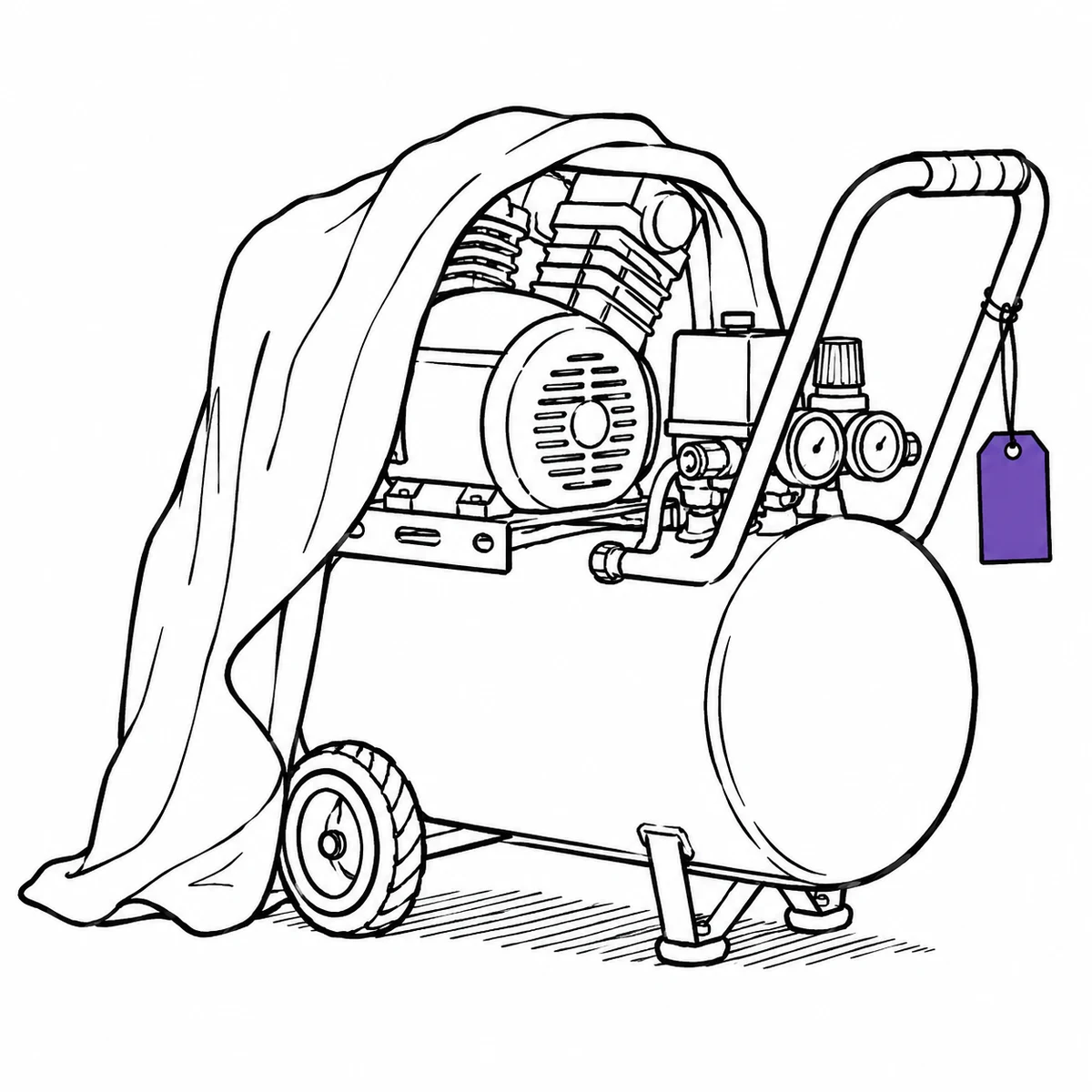
We found the compressor on the register in March. It had been sold two years earlier. Nobody could say who bought it, or what we got for it.
Equipment joins a register enthusiastically and leaves it silently. Everything after the purchase is where the record either holds or rots.
The five stages
Five stages — but the middle two are not a sequence. They run at the same time, for years.
Plan
Decide what is needed — and whether you already own something that would do.
Acquire
Purchase or lease, and get the item into the register before it disappears into use.
Operate
The long middle: custody, location and utilisation.
Maintain
Servicing, repairs and condition — alongside use, not after it.
Dispose
Retirement, sale, recycling or write-off, with the record closed rather than abandoned.
Stage 5 is the one that gets skipped, which is why registers fill up with equipment that no longer exists.
Disposal is the neglected stage
Registers rot at the end, not the beginning. Equipment is enthusiastically added and quietly forgotten when it is scrapped, so the register slowly fills with items that no longer exist. This is the single most common reason an inventory becomes untrusted.
Disposal also carries obligations that outlive the equipment: data destruction on anything with storage, regulated disposal for batteries and refrigerants, and evidence of both for auditors. A disposal record is worth more than the item was.
Total cost of ownership
Purchase price is usually the smaller half. TCO adds consumables, servicing and repairs, downtime cost, insurance, storage, training, and disposal — offset by whatever it sells for at the end.
You cannot calculate it without a history per item, which is the practical argument for lifecycle tracking: it is what turns "this machine feels expensive" into a number that can be compared against the alternative.
What goes wrong without it
Managing only the purchase and ignoring the rest means replacement decisions are made on gut feel, and registers fill up with equipment that was scrapped years ago.
How Itefy handles it
Itefy holds each item's whole life in one record — purchase details, bookings, checkouts, condition, repairs and costs — through to archiving on disposal. Read more.