
← Equipment management glossary
Also called: preventative maintenance, planned maintenance, PM.
The compressor was serviced every March, whatever it had done that year. It failed in August in the middle of a pour, and the hire replacement cost more than the year’s servicing.
Most operations should run a mix of all three, sorted by what a failure actually costs.
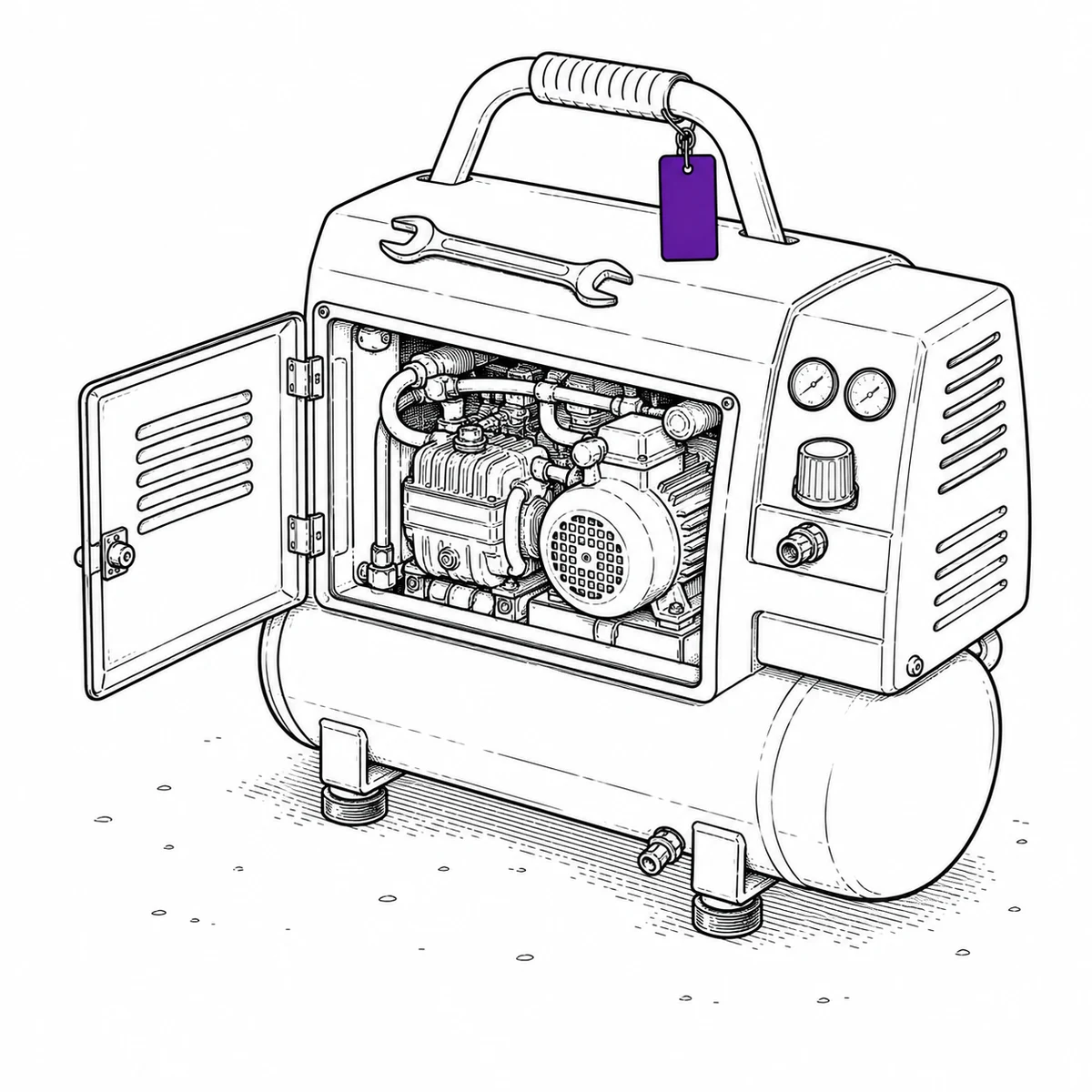
Reactive, preventive, predictive
Reactive
Fix it after it breaks. Not automatically wrong — for cheap, non-critical, quickly replaced equipment it is the rational choice, and pretending otherwise leads to elaborate schedules for items nobody misses.
Preventive
Service on a schedule, whether or not anything looks wrong. Trades some unnecessary servicing for many fewer surprise failures.
Predictive
Service when the equipment indicates need — vibration, temperature, hours, error counts. The most efficient and the most demanding, since it needs instrumentation and data nobody has by accident.
Setting intervals
Start with the manufacturer's schedule, then adjust to your own evidence. Manufacturer intervals assume typical use in typical conditions; equipment run hard, run in dust, or run by many different people usually needs shorter ones.
Where usage varies a lot between items, schedule by usage rather than by date. Servicing two identical machines annually when one does five times the work of the other over-services one and under-services the other.
Why PM programmes fail
Almost never at the planning stage. Schedules are easy to write and satisfying to produce. They fail on follow-through: nothing reminds the right person at the right time, so due work slides; nothing records what was actually done, so nobody can tell whether the schedule is being kept; and the resulting history is too patchy to justify the programme when its cost is questioned.
A modest schedule that is genuinely completed and recorded beats a thorough one that exists mainly as a document.
What goes wrong without it
Without a schedule that reminds someone and records what was done, maintenance becomes reactive by default — and unplanned failure is both more expensive and worse timed than planned servicing.
How Itefy handles it
Itefy schedules recurring maintenance per item, notifies the responsible user when it is due, and keeps completed work with costs in the item's service history. Read more.