
← Equipment management glossary
Also called: equipment utilization, utilization rate.
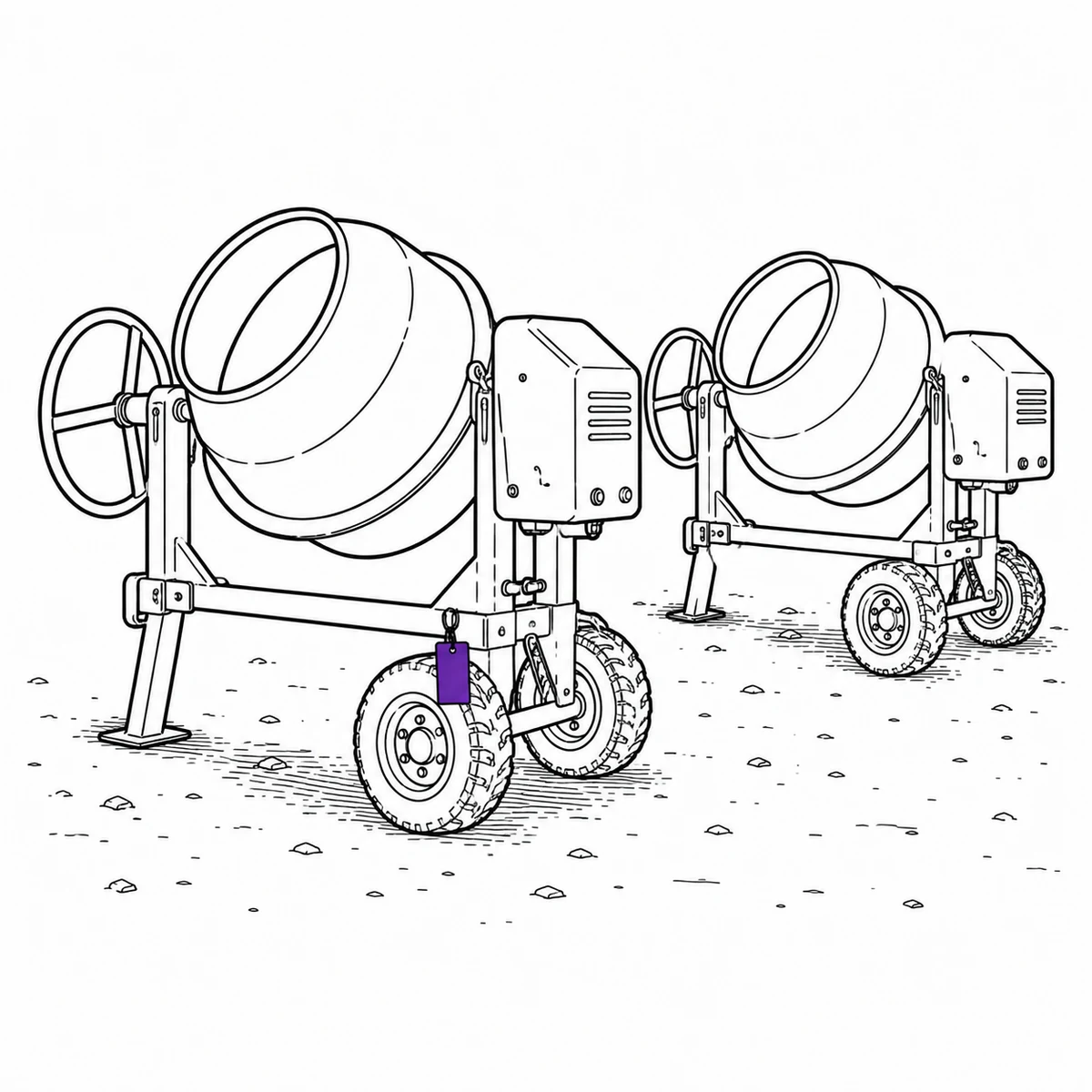
Two identical mixers. One ran most weeks and the other sat behind it. Both were reported at the same utilisation, because nobody had written down what available meant.
The arithmetic is trivial. The denominator is where the entire argument is.
Equipment utilisation rate
Utilisation rate = (Time in use ÷ Time available) × 100
-
Time in use
Actual recorded use. If the figure comes from reservations rather than checkouts it measures intention, not use — and the gap between the two is worth knowing on its own.
-
Time available
Calendar hours, working hours, or working hours minus planned maintenance. All three are defensible, but a rate calculated one way cannot be compared with a rate calculated another.
Pick working hours minus planned downtime unless you have a reason not to, write the definition down, and apply it everywhere. Mixing definitions within one organisation makes the whole metric useless.
What a good rate looks like
There is no universal target, and high is not automatically good. Equipment at 95% utilisation has no slack: one breakdown or one overrun and something downstream stops. Equipment at 15% is either genuinely spare capacity you are choosing to hold, or capital sitting idle that could be redeployed or sold.
The useful reading is comparative. Two identical machines where one runs at 70% and the other at 20% is a signal about location, booking behaviour or a fault nobody logged — and that is a question worth asking.
The two ways it misleads
First, booked time is not used time. If your figure comes from reservations rather than actual checkouts, it measures intention. Comparing planned against actual is how you find out how far apart they are.
Second, utilisation says nothing about value. A machine used constantly for low-value work scores well; an expensive item used rarely but for critical jobs scores badly. Read it alongside cost and purpose, not alone.
What goes wrong without it
Without utilisation data, purchasing decisions are made on whoever complains loudest about availability, and idle equipment is invisible because nothing reports on absence of use.
How Itefy handles it
Itefy derives utilisation from actual checkouts rather than bookings, per item and across the fleet, and its planned-vs-actual report shows the gap between the two. Read more.