
← Equipment management glossary
Also called: category vs type, equipment types and categories.
The list had a type called “Camera – Site B – Insured”. Then one called “Camera – Site B”. The camera moved to Site A, and somebody made a third.
A type answers “what is this?” and has exactly one right answer. Categories answer “what is this like?” and any number can be true at once.
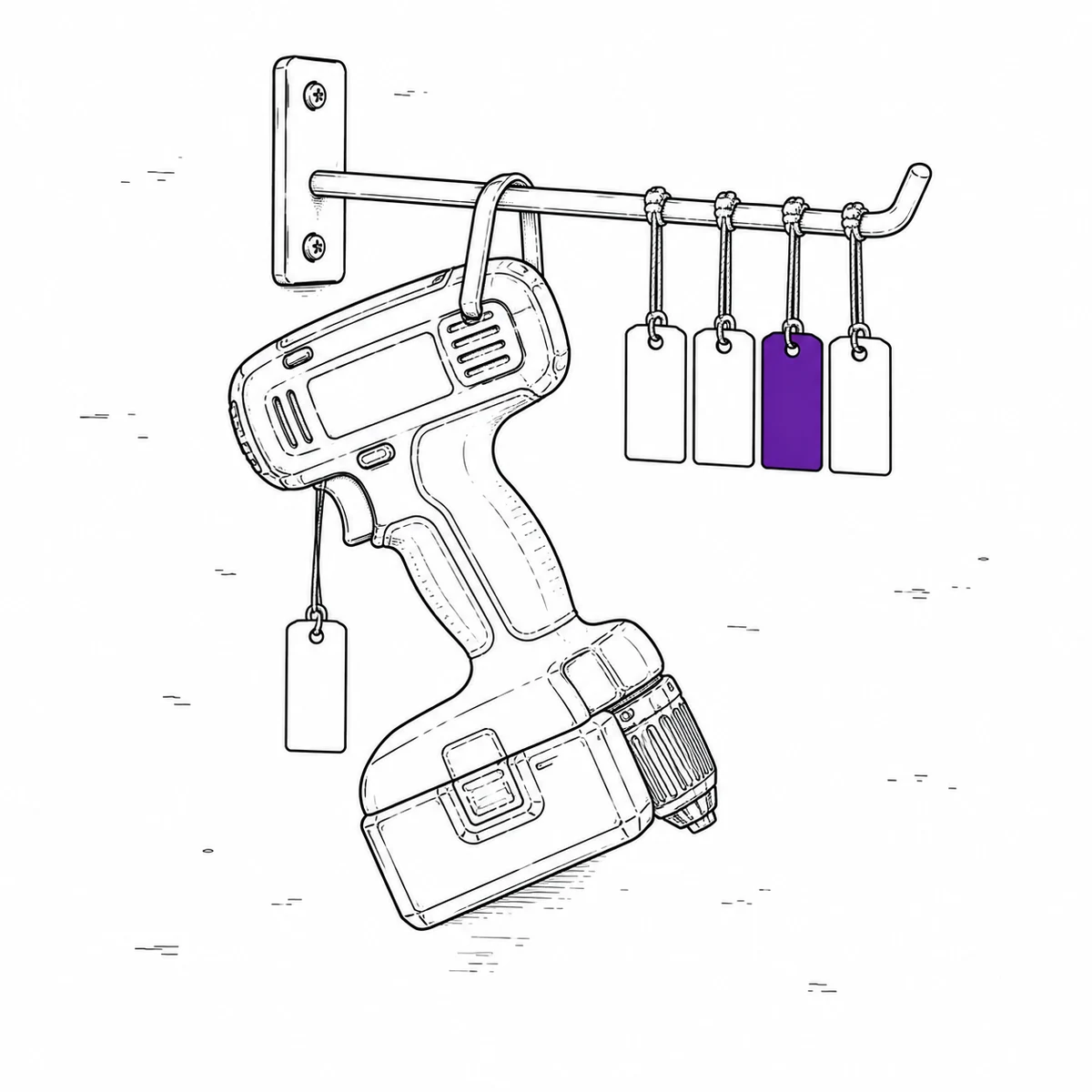
One type, many categories
What is this?
A camera, a vehicle, a laptop. The question has exactly one right answer, and that is what makes it a type rather than a label.
exactly one per itemWhat is this like?
Battery-powered, requires certification, owned by Site B, PAT-tested, insured separately — and any of them can be true at the same time.
any number per itemGet it backwards and the list collapses into hybrids that multiply until nothing is findable, and no two people classify the same item the same way.
A test for which one you need
Ask whether an item could reasonably need two of the values at once. If yes, it is a category. A drill cannot be both a drill and a vehicle, so that is a type. A drill can be both cordless and requiring PPE, so those are categories.
Second test: would you ever want to filter by this in combination with something else? Combination filtering is what categories exist for.
Keep the type list short
Types are most useful when there are few enough to hold in your head — typically ten to thirty for an equipment register. A list of two hundred types means attributes have leaked into it, and the fix is to move them out into categories rather than to keep subdividing.
Categories can be as numerous as you like, because you never have to browse them all at once; you filter.
What goes wrong without it
Mixing attributes into the type list produces hybrid types that multiply combinatorially, so equipment becomes unfindable and two people classify the same item differently.
How Itefy handles it
Itefy separates the two deliberately: one type per item, plus as many custom categories as you need, and the item list filters on any combination of them. Read more.