
← Equipment management glossary
Also called: equipment list, equipment register.
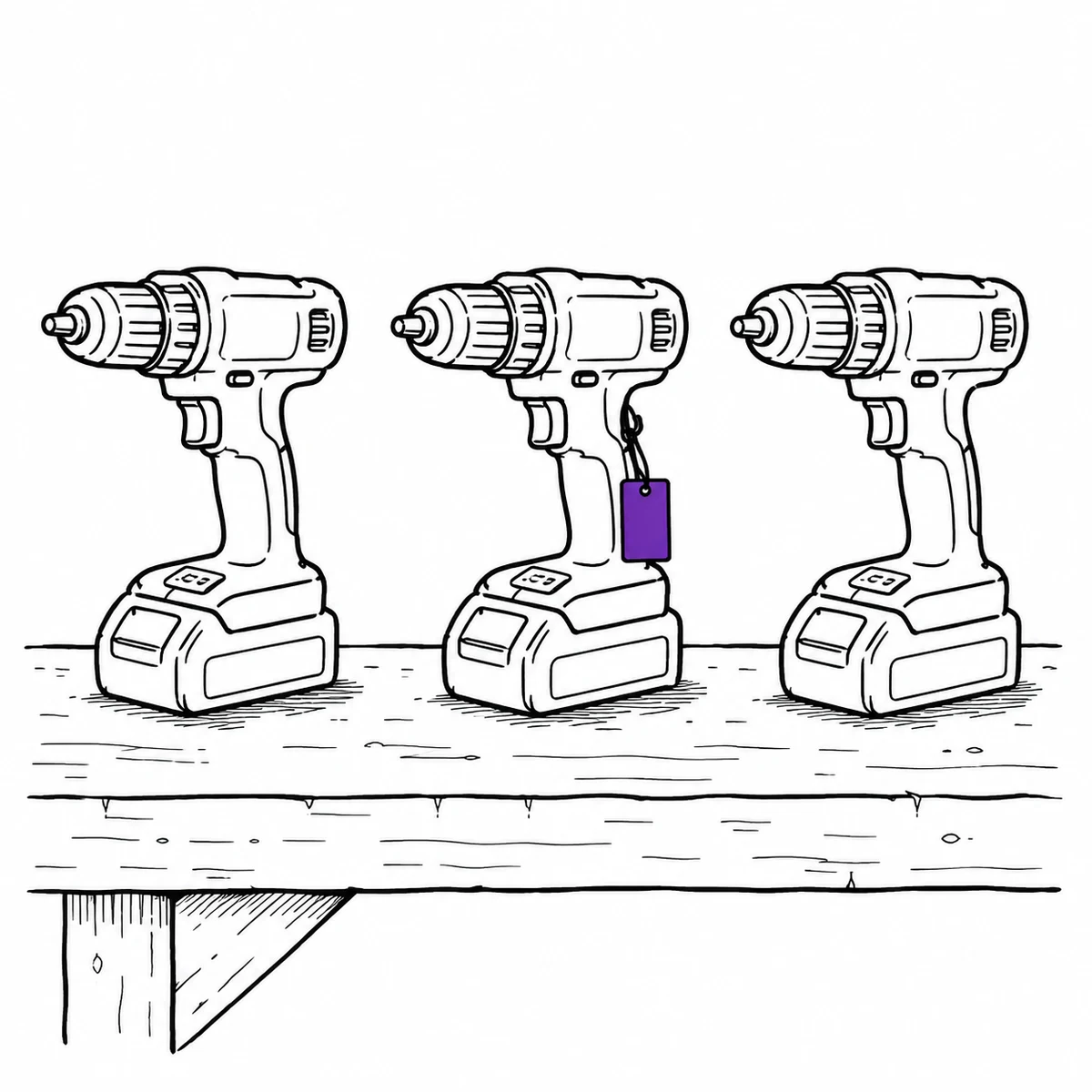
The spreadsheet had forty columns. Eleven of them were filled in. Somebody asked which of the three identical drills had been serviced, and the row could not say.
Fields nobody maintains are worse than absent, because they make the whole record untrustworthy. A short list that is always filled in beats a long one that is not.
The fields that survive contact with real use
A useful equipment inventory is narrower than people expect. This is the set that stays filled in.
A name people recognise
Brand, model, then something that separates it from the identical one standing next to it.
A unique identifier
The thing a label points at, and the only field that has to survive the item’s whole life.
Type
What it is. Exactly one answer per item.
Home location
Where it should be returned to.
Current location
Where it actually is.
Condition
A coarse grade, applied the same way by everyone.
Person accountable
Who answers for it right now.
Money fields — purchase date, purchase value, expected salvage value — are worth adding if anyone will ever ask about depreciation, insurance or replacement budgeting. Add them once, at import, rather than promising to backfill later.
Naming is the decision that matters most
The single most common reason an inventory becomes unusable is inconsistent naming. Pick a convention — typically brand, model, then a distinguishing identifier — and apply it to everything. Where you have several identical items, number them (#1, #2, #3) rather than relying on people to describe them.
The test is simple: can someone holding the item find its record in under ten seconds, without asking anyone?
An inventory is not a stock count
A stock count tells you how many of something you have. An equipment inventory tells you which one, and what happened to it. If your items are interchangeable and consumed, you want stock control. If they are individually identifiable and come back, you want an inventory with a history per item.
Most organisations need both, for different things — consumables counted, equipment individually tracked.
What goes wrong without it
An inventory nobody reconciles quietly becomes fiction: it lists equipment that was written off years ago and misses everything bought since, so budgets and insurance claims are built on numbers that were never true.
How Itefy handles it
Itefy builds the register from your existing spreadsheet through a three-step import, then keeps it current because usage updates it rather than someone remembering to. Read more.