
← Equipment management glossary
Also called: equipment asset management, management of equipment.
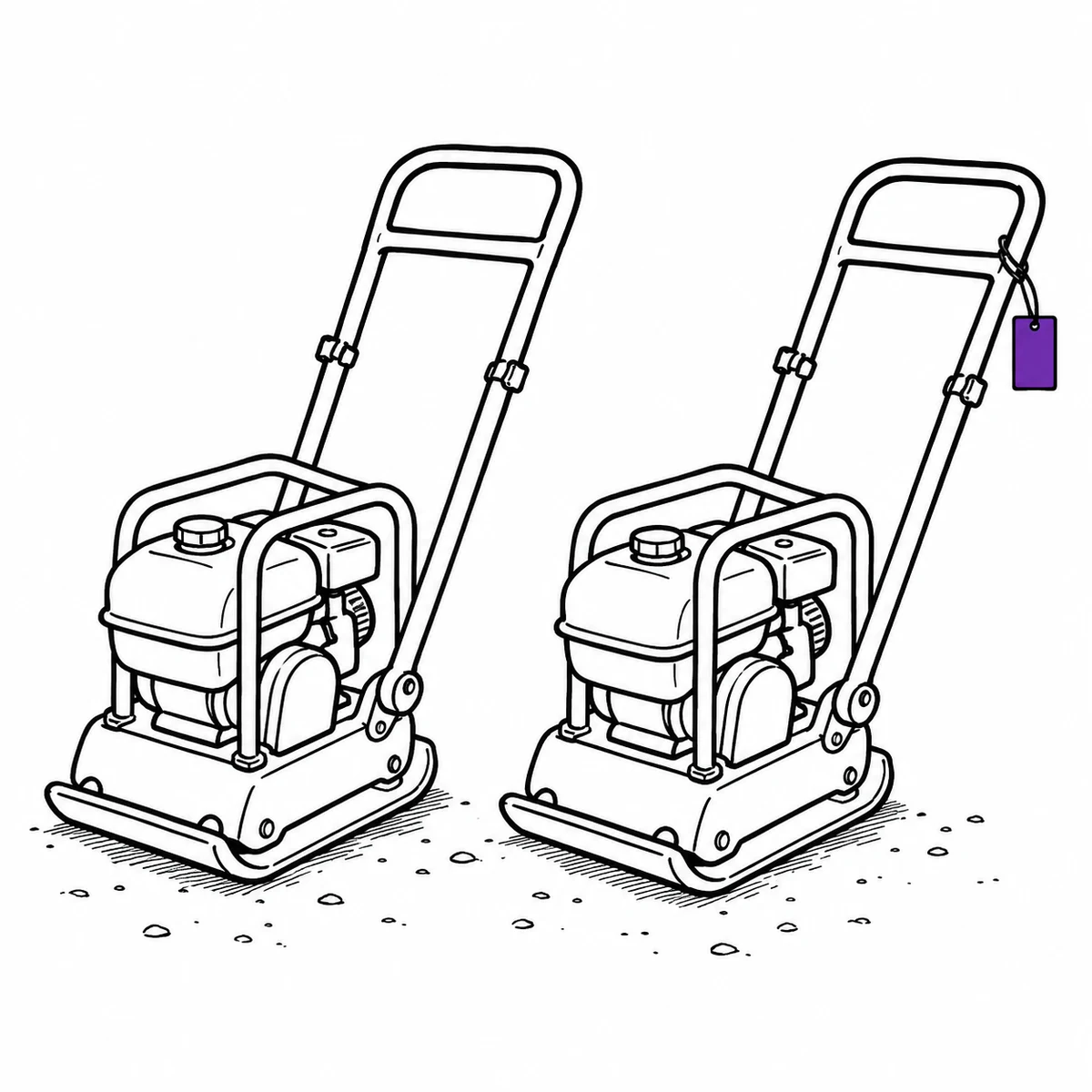
We bought a second plate compactor in March. The first one was in the back of a van at the Kirkby site. Two people knew that. Neither was asked.
Equipment management is five questions that share one set of facts. Answer them in five different places and they drift apart within weeks.
The five jobs that have to stay in sync
Each one is easy on its own. The difficulty is that a single event — a machine going out on loan — changes all five at once.
What you own
A register that is complete, because additions were recorded at acquisition rather than eventually.
Where it is
Not the shelf it belongs on, but the site, vehicle or room it is in right now.
Who has it
One named person accountable at any moment, and a record of the handover that made them so.
Whether it works
Condition, servicing and repairs — kept per item, because two identical machines diverge from the day they arrive.
What it costs
How much it is used, and what it has cost to keep, which is what makes a replacement decision an observation rather than a guess.
A machine that goes out on loan changes hands, changes location, accrues usage and moves closer to its next service — all from one event. Systems that treat those as separate records are the ones that end up disagreeing with each other.
How it differs from asset and inventory management
Asset management is usually financial: what things are worth, how they depreciate, what appears on the balance sheet. Inventory management deals in quantities of interchangeable things — you care that you have 40 filters, not which filter is which.
Equipment management sits between them and is concerned with individually identifiable, reusable items. A specific excavator, camera body or laptop, which comes back after use and has a history worth keeping. That distinction decides which tool fits: counting stock is a different problem from tracking custody.
When a spreadsheet stops being enough
A spreadsheet holds the current state well and history badly. It cannot notice that a due date has passed, cannot tell the person holding an item, and cannot stop two people booking the same kit — because availability in a sheet is a human reading rows and drawing a conclusion.
The usual trigger for change is not item count. It is the first time someone has to walk around the building asking where something is.
Where to start
Equipment management is rarely anyone's whole job. It is usually a responsibility handed to someone on top of their actual work. If that is you, how to manage company equipment, step by step takes you from agreeing the scope with your manager to a working monthly routine, in nine steps.
What goes wrong without it
Without it, equipment gets re-bought because nobody knew it already existed, goes missing without anyone being accountable, and fails early because servicing depended on somebody remembering.
How Itefy handles it
Itefy keeps all five jobs in one system, so a checkout updates custody, location, utilisation and service history from a single action. Read more.