
← Equipment management glossary
Also called: loan of equipment agreement, equipment loan form.
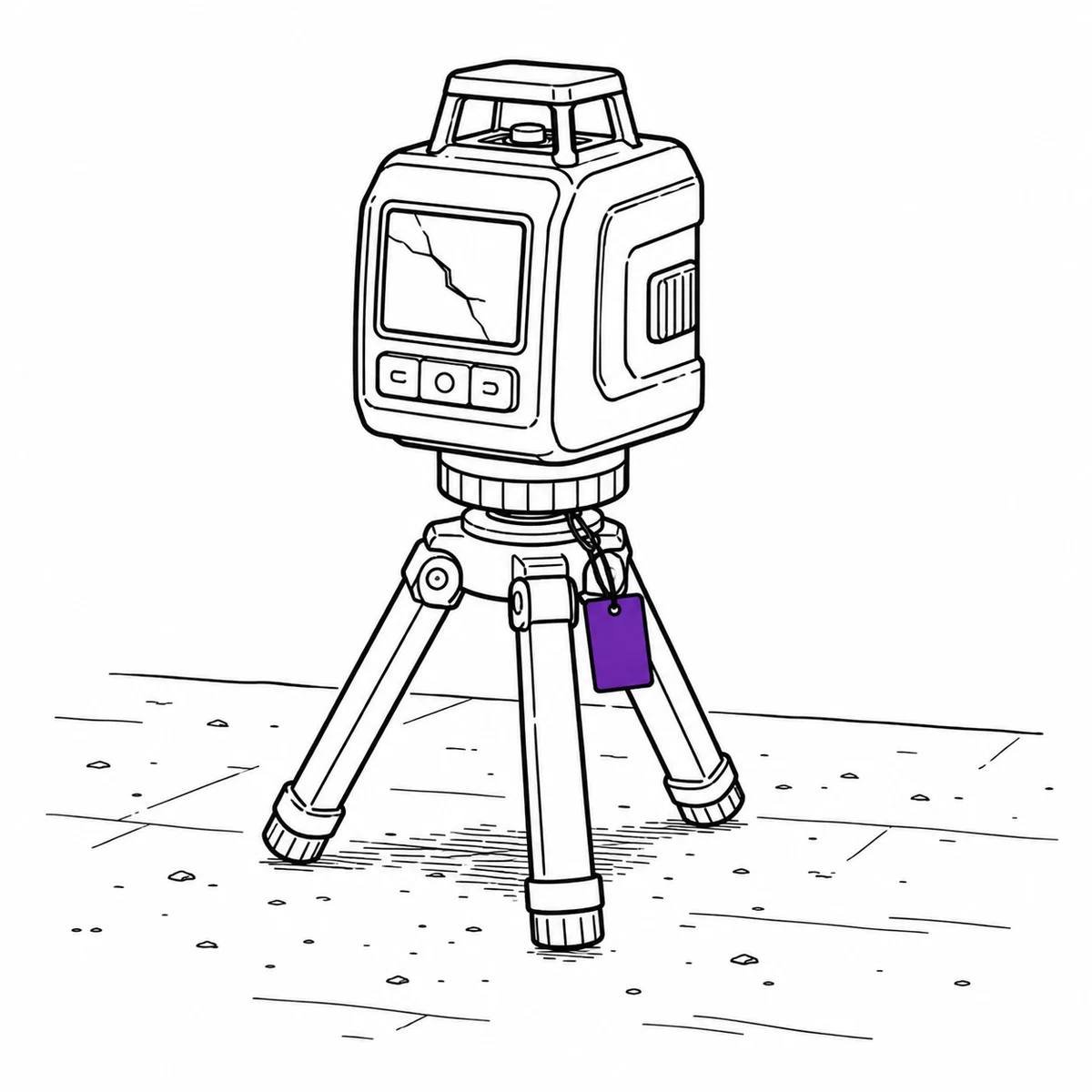
He brought the laser level back with a cracked screen and said it was like that when he collected it. There was no photograph. Two people remembered it differently.
Whatever the format, the same handful of facts do the work — and the one most forms leave out is the one that settles arguments.
What a loan agreement has to contain
Who is taking it
A named person, not a department.
Exactly which items
Identified individually. Not “a camera”.
When it goes out
Timestamped, ideally by the act of handing it over rather than by someone writing it down.
When it is due back
Without this nothing is ever late, because there is no point of comparison.
Where it will be used
Which is also where you will look for it.
Condition at handover
Ideally with photographs. Without a before state, damage disputes come down to two recollections.
the field most forms omitA dated photo attached to the handover ends that conversation before it starts.
Where liability language belongs
Many templates carry clauses on responsibility for loss, damage and repair cost. These matter when equipment leaves your organisation entirely — to a customer, a contractor, a volunteer — because you are relying on someone outside your control.
For internal lending between employees, a signature usually adds friction without adding protection; employment terms already cover company property. The useful record there is not consent, it is custody: an unambiguous log of who had it and when.
One caveat: if your agreement is doing real legal work — high-value equipment, external parties, insurance requirements — have it reviewed by someone qualified in your jurisdiction. Generic templates, including advice on pages like this one, are a starting point rather than a substitute.
The paperless version
A logged checkout captures every field a loan form does, timestamps it automatically, and produces something a paper form never can: a searchable history per item. Where a signature is genuinely required, most teams attach a signed PDF to the checkout record rather than running two parallel systems.
What goes wrong without it
Without a record of condition at handover, every dispute becomes one person's memory against another's — and the organisation absorbs the cost by default.
How Itefy handles it
In Itefy, a checkout records the borrower, the exact items, the due time, the purpose and the location, with photos and documents attachable to the record. Read more.