
← Equipment management glossary
Also called: custody trail, custody record.
The meter was signed out on the second and signed back in on the ninth. In between, two people had used it on a different site. The log did not say so, and the log was what the auditor read.
A record with gaps does not prove less than a complete one. In a dispute it often proves nothing at all, because any gap is where the other party places the event.
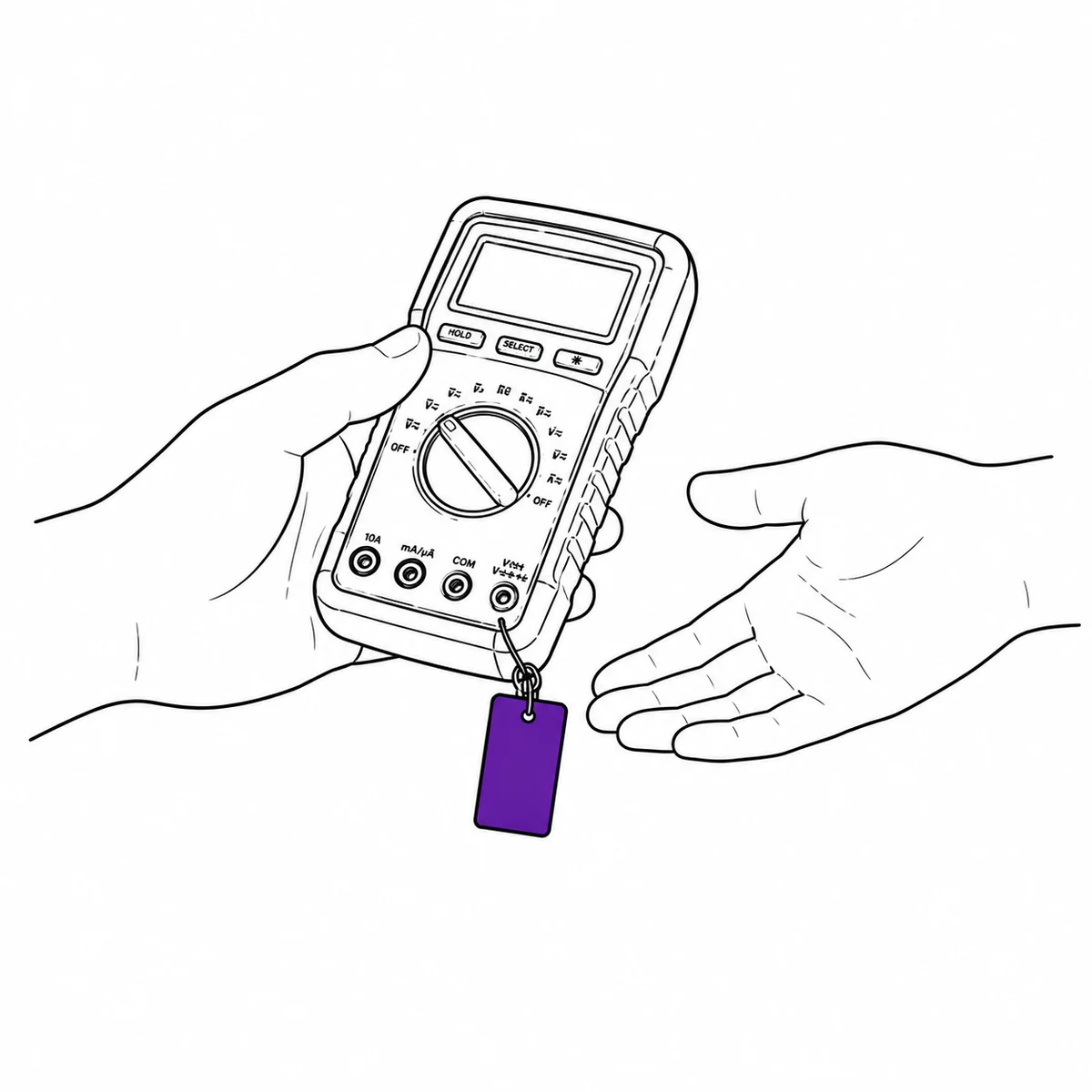
One gap is the whole argument
Three handovers, one of them unrecorded. The unrecorded one is not a smaller version of the record — it is where the record stops being evidence.
Issued
Timestamped, to a named person. The chain starts here.
Passed to a colleague
Informal, out of hours, or straight from one job to the next. Nothing logs it.
Returned
Timestamped, and apparently complete. The week in the middle is unaccounted for.
Where it stops being optional
For most equipment, custody records are simply good management. In several contexts they are a requirement: regulated medical devices, calibrated test and measurement equipment, controlled substances, evidence handling, and equipment whose maintenance history has to be demonstrable to an auditor or insurer.
In those settings the record's value is evidentiary, which raises the bar. Timestamps that cannot be edited after the fact, and a log that shows amendments rather than silently overwriting, matter more than in ordinary use.
What breaks a chain in practice
Rarely fraud. Usually four mundane things: informal handovers between colleagues that nobody logs, equipment moved during out-of-hours work, items that go from one job straight to the next without returning to store, and records edited later to "tidy up" — which destroys the very property that made them useful.
What goes wrong without it
A custody trail with gaps offers little protection in a dispute, because the gap is exactly where the other party will place the loss or the damage.
How Itefy handles it
Every Itefy checkout, check-in, location change and condition change is timestamped against the item and kept in its history rather than overwriting the previous state. Read more.