
← Equipment management glossary
Also called: check-out and check-in, equipment issue and return.
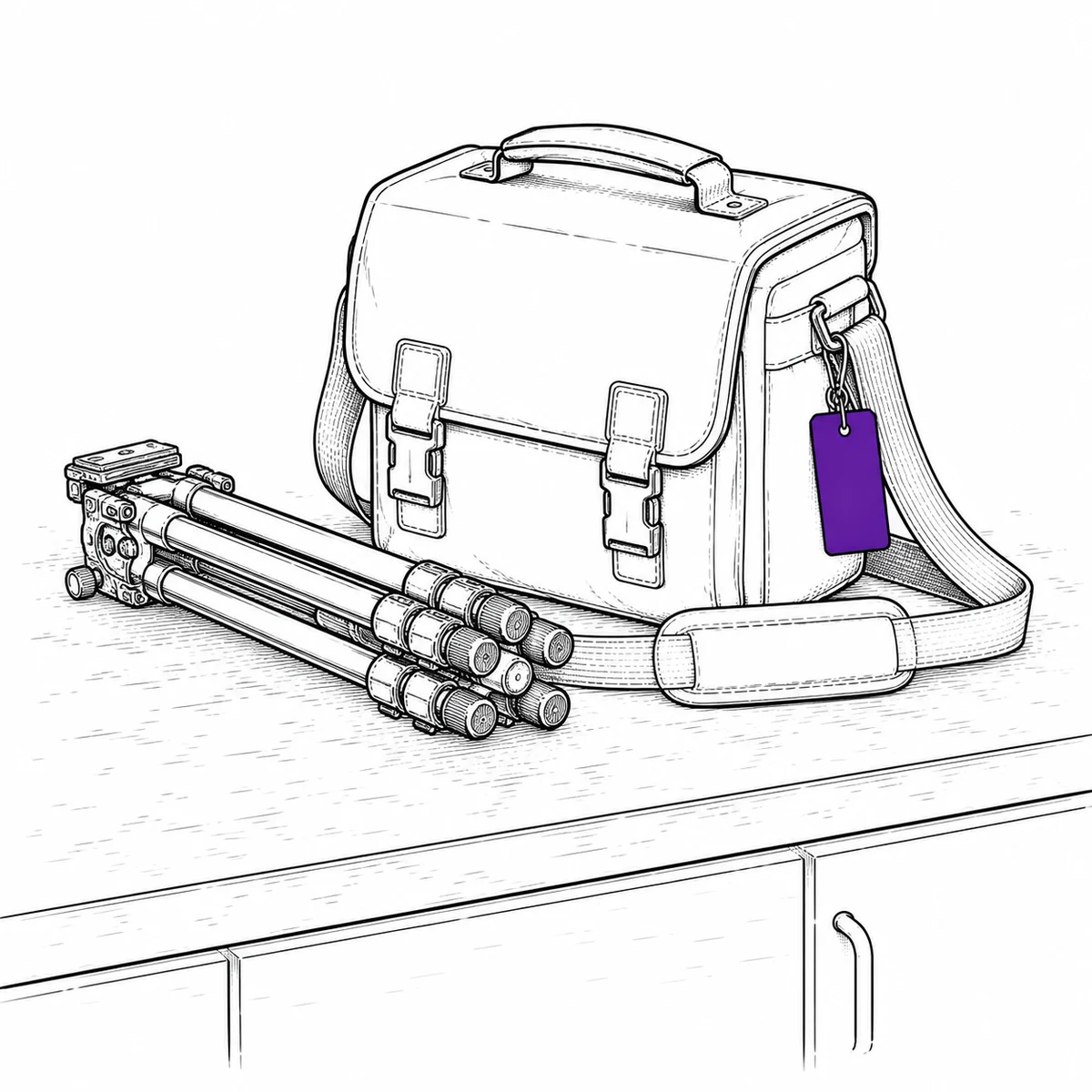
The record showed the whole package still out. In fact the tripod and the bag had come back on Thursday, and only the body was still with him. Nothing in the system could say that.
A checkout is an open record. It stays open until something closes it, which is exactly what lets it become overdue.
An open record, and what closes it
Available
Nothing claims it.
Checked out
Who, what, why, where and until when. The “why” is more useful than it looks — purpose turns a custody log into usage data you can report on.
Held
A live claim that a named person currently has a specific item. This is the state a log entry cannot represent.
Checked in
Closing the record is what ends the claim. It can close in one go, or line by line while the rest stays out.
partial check-in closes individual linesand it is available again
Partial check-in
Multi-item checkouts rarely come back all at once. Someone returns the tripod and the bag but keeps the camera another day. Systems that only allow all-or-nothing check-in force a choice between closing the record while items are still out — losing custody of them — or leaving everything open and losing track of what is genuinely available.
Partial check-in resolves this by closing individual lines while the checkout stays open for the rest.
Checkout versus reservation
A reservation is a claim on future time; a checkout is custody now. They are complementary: the reservation stops someone else booking the item, the checkout records that it actually left. The gap between them — reserved but never collected, or collected without a booking — is a genuinely useful thing to measure.
What goes wrong without it
Without an open, closable record, nothing can be overdue, so equipment is only chased once someone else needs it and finds it missing.
How Itefy handles it
Itefy records reason, items, return time and optional location, assignee and linked customer per checkout, supports partial check-in, and flags overdue items automatically. Read more.