
← Equipment management glossary
Also called: TCO, lifecycle cost.
The cheaper press won the tender by eight thousand. Over five years it ate that twice over in consumables, and nobody went back to check.
Purchase price is usually the smaller half. TCO most often reverses the conclusion that the cheaper option was the cheaper option.
Total cost of ownership
TCO = Purchase + Operating + Maintenance + Downtime + Disposal − Resale value
-
Purchase
The acquisition — and the only figure most comparisons actually use.
-
Operating
Consumables, power, training repeated with staff turnover, storage, transport, insurance while idle.
-
Maintenance
Servicing and repairs across the whole life, not the warranty period.
-
Downtime
Equipment that is unavailable costs money even when nothing is being spent on it. Routinely left out, and often the difference between two options that looked equivalent.
-
Disposal
Regulated disposal, data destruction, decommissioning — sometimes a substantial negative at the end.
-
Resale value
What it fetches, which is what all of the above is offset by.
Where it changes the decision
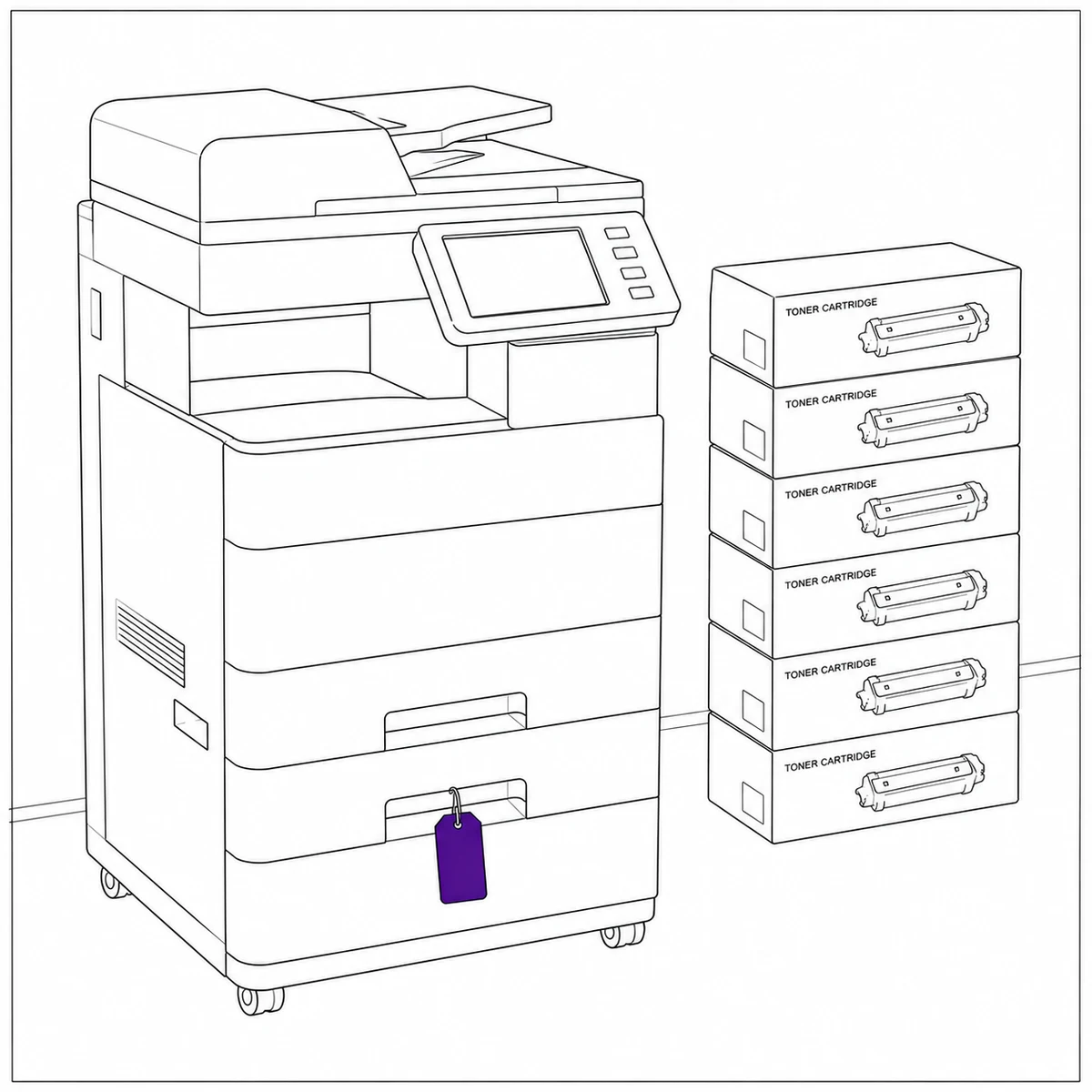
TCO most often reverses two conclusions. The cheaper purchase with higher consumable or servicing costs loses over five years — printers, coffee machines and low-end power tools are the classic examples.
And buy versus rent turns on utilisation. Owned equipment carries its full cost whether used or not; rental converts that to a per-use charge. Below a certain utilisation, renting is simply cheaper, and you cannot find that threshold without knowing both TCO and actual usage.
It needs history to be real
TCO calculated at purchase is a forecast built on assumptions. TCO calculated from three years of recorded servicing, repairs and downtime is a measurement, and the two are frequently far apart.
This is the practical argument for per-item cost tracking: it turns the next purchase decision from an estimate into an observation.
What goes wrong without it
Buying on purchase price alone systematically favours equipment that is expensive to run, and the difference only becomes visible in year two, when the decision cannot be undone.
How Itefy handles it
Itefy accumulates purchase value, maintenance and repair costs against each item, so cost reporting reflects what equipment actually cost rather than what it was expected to. Read more.