
← Equipment management glossary
Also called: tool room, tool store.
At shift change the queue at the counter was eleven people deep. By the third week half of them had stopped queuing, and the torque wrenches lived in toolboxes.
The choice is between accountability and throughput, and most operations end up running both.
Attended or self-service
Someone at the counter
Accountability is high and so is the labour cost. The counter becomes a queue at shift change, and a queue is what teaches people to stop using it.
Workers record it themselves
Removes the bottleneck, and depends entirely on whether recording is fast enough that people actually do it — which in practice means scanning rather than writing.
Many operations run a hybrid: consumables and low-value tools self-service, high-value and calibrated tools attended.
Shadow boards solve a different problem
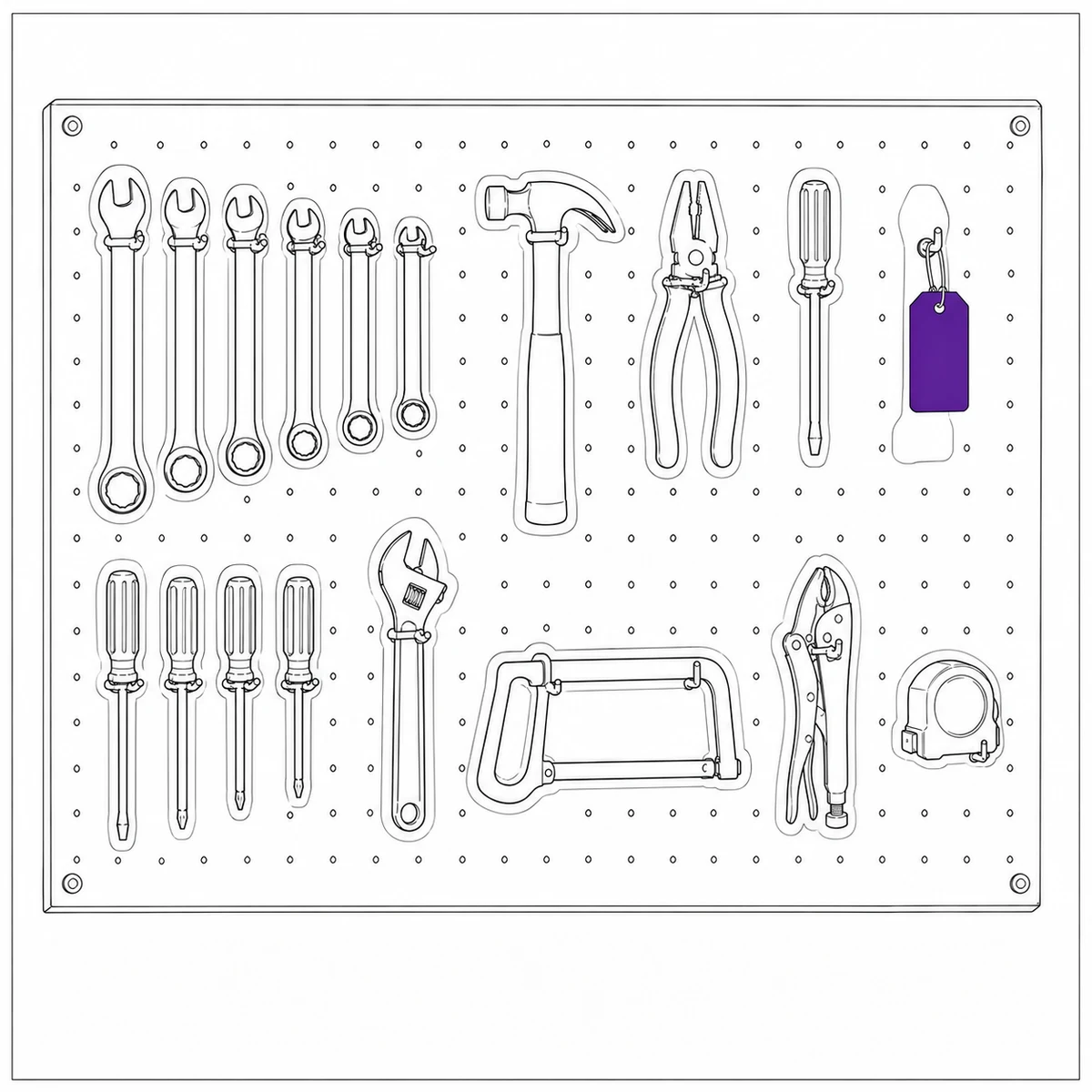
A shadow board — the outline of each tool on the wall — makes a missing tool instantly visible at a glance, which is why it is standard in lean and in aviation and medical settings where a tool left behind is a safety event.
What it does not tell you is who has it, or when it is due back. Shadow boards and issue records are complementary: one shows that something is out, the other says who is accountable.
The four recurring problems
Consumables treated as tools, so drill bits and blades are checked out individually and nobody keeps it up. Count those, do not track them.
Tools that live in toolboxes and never return to the crib, quietly becoming personal property.
Calibrated tools issued past their due date, which turns a records problem into a quality problem.
Shift handover, where tools change hands between people without passing through the crib and the record silently goes stale.
What goes wrong without it
A crib without a fast way to record issue and return ends up with tools distributed among personal toolboxes, and buys replacements for equipment it already owns.
How Itefy handles it
Itefy issues tools by scanning a QR label from a phone, tracks consumables separately with low-stock alerts, and flags overdue items — including anything past a calibration date. Read more.