
← Equipment management glossary
Also called: default location, home location vs current location.
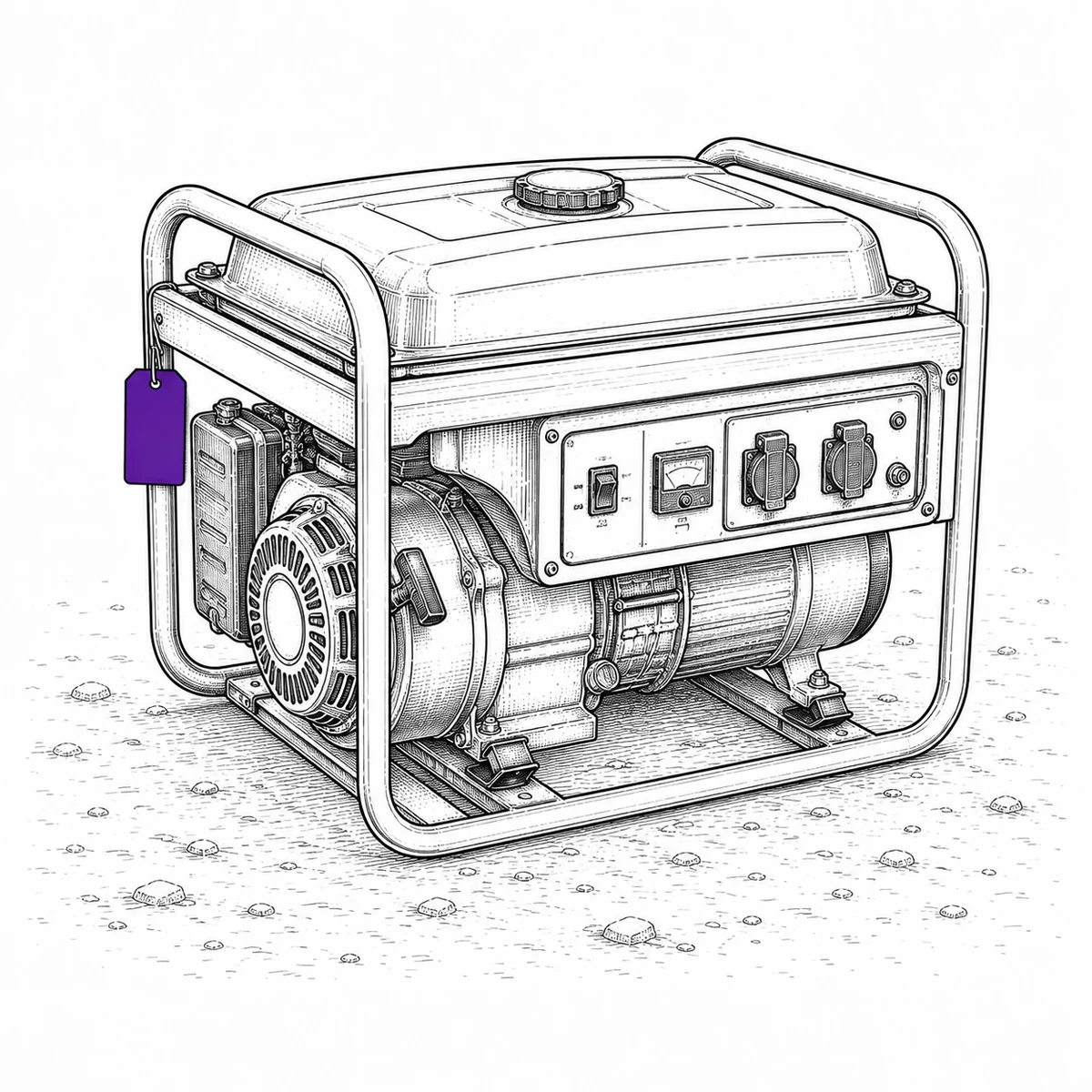
The list said the generator was in the yard. It had been at the Fairfield site since April. Nothing was wrong — but nothing said so either.
Two questions, two fields. Collapse them into one and you lose one of the answers.
Where it lives, and where it is
Where it should be returned to
A policy statement. It changes rarely, and it is what tells someone holding the equipment where to put it back.
Where it actually is
A fact, and it changes constantly as equipment moves between sites, vehicles and rooms.
The gap between them is the useful part
Comparing the two gives you something neither provides alone: a list of equipment that is not where it belongs. Most of that list is legitimate — items in use, out on loan, at a job site. The remainder is the interesting part, because equipment that is away from home with no checkout explaining why is exactly what goes missing.
This is also the cheapest possible audit. You do not have to count anything to produce a list of items whose location nobody can account for.
Getting the granularity right
Locations that are too coarse ("Head Office") tell nobody anything. Locations so fine that they need constant updating ("Shelf 3, bay 2, third from left") stop being maintained within a month.
The workable level is usually the smallest space a person would walk to: a room, a store, a vehicle, a site. Nested locations help — a room inside a building inside a site — because they let people record at whatever precision they actually know.
What goes wrong without it
With only one location field, you can know where something is or where it should be, but never that the two disagree — which is the signal that equipment is drifting.
How Itefy handles it
Itefy holds home and current location per item, both settable at import, with nested locations and a location changelog per item. Read more.