
Employee equipment tracking: accountability without the awkwardness
Laptops, phones, tools, access cards — the average employee holds thousands worth of company equipment, and most companies can't list it. A tracking setup that makes onboarding fast, offboarding complete, and nobody feel surveilled.
In this article
- The core: a per-person equipment ledger
- Onboarding: the fifteen-minute version
- The quiet middle: swaps, repairs, and drift
- Offboarding: where the ledger pays for itself
- Keeping it felt-fair
The finance version of this story is a line item: IT equipment, unaccounted for, written off. The human version is more familiar — someone left eight months ago, and someone else is now asking where the good camera went, and the answer lives in nobody's inbox.
Between onboarding gifts and departure losses, employee-held equipment is one of the least-tracked asset pools in most companies — precisely because it's personal. Tracking a warehouse feels normal; tracking what's in Kari's laptop bag feels like an accusation. So here's the reframe that makes the whole thing work: the record protects the employee as much as the company. A clean issue record means nobody can later claim you were given something you weren't, billed for damage that predates you, or chased for a monitor you returned in March.
The core: a per-person equipment ledger
Everything else is decoration on one structure: each item has a record, and issuing it to someone is a recorded event — a checkout against their name, with a date and, for anything that matters, a condition photo. From that moment, two lists exist automatically:
- Per person: everything Kari currently holds.
- Per item: everyone who has ever held this laptop.
Both lists are boring right up until the day they're the only thing that matters — the theft claim, the departure, the "that dent was already there" dispute, the audit.
What belongs in the ledger? Not everything. The threshold that works: would its quiet disappearance matter? Over-tracking is how these systems die; a ledger full of staplers teaches everyone to ignore it.
| Track it | Skip it |
|---|---|
| Laptops, phones, tablets, monitors | Mice, keyboards, cables |
| Tools and test instruments | Consumables (bits, blades, batteries) |
| Vehicles and vehicle keys | Office supplies |
| Access cards, keys, fobs | Chairs and desks (unless they move between sites) |
| Cameras, radios, safety equipment | Anything cheaper to lose than to log |
The right column isn't "untracked" — consumables belong in stock counts with restock alerts, not in a custody ledger. Different question, different tool.
Onboarding: the fifteen-minute version
Day-one equipment hand-out is the moment of maximum goodwill and maximum sloppiness — five items, no record, everyone's in a hurry. Structure it once:
- Standard kits per role. "Field technician" = laptop, phone, multimeter, van key. Issue the kit, not five separate afterthoughts — kit thinking also makes gaps visible ("where's her multimeter?" beats discovering it in month three).
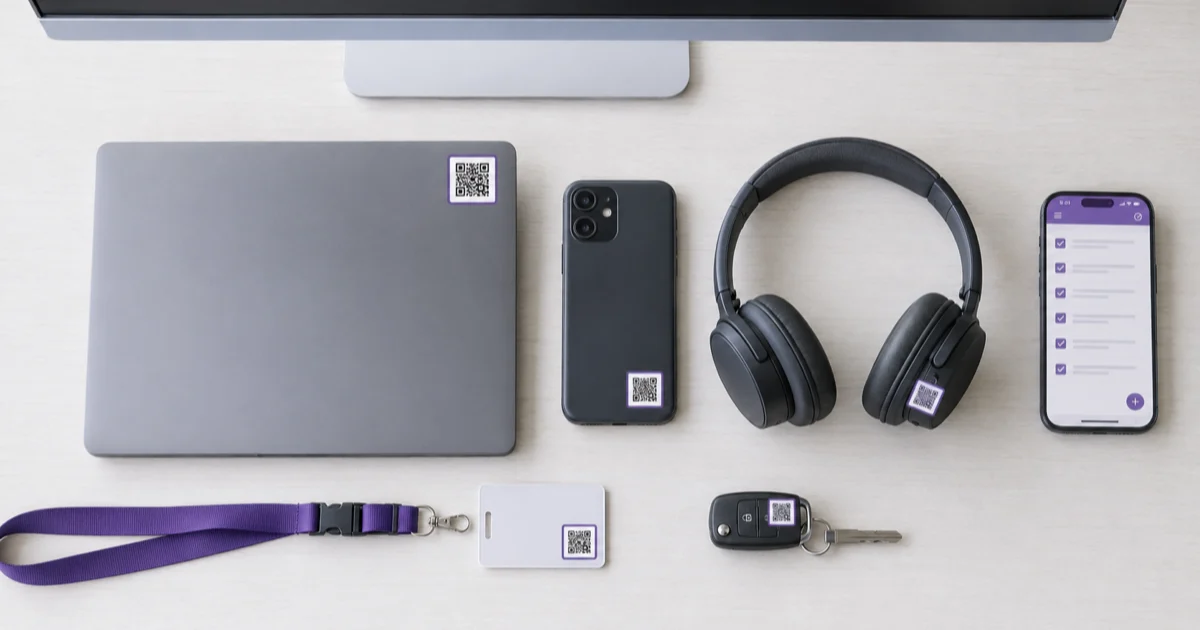
- Scan at hand-over. Each item's QR label scanned against the new hire: fifteen seconds per item, and the ledger writes itself while the goodwill is intact.
- Condition photos for the expensive stuff. Thirty extra seconds that de-escalate every future damage conversation.
The quiet middle: swaps, repairs, and drift
Equipment assignments rot between the big events: the loaner that became permanent, the broken laptop swapped in the hallway, the monitor that migrated desks. Two habits stop the rot:
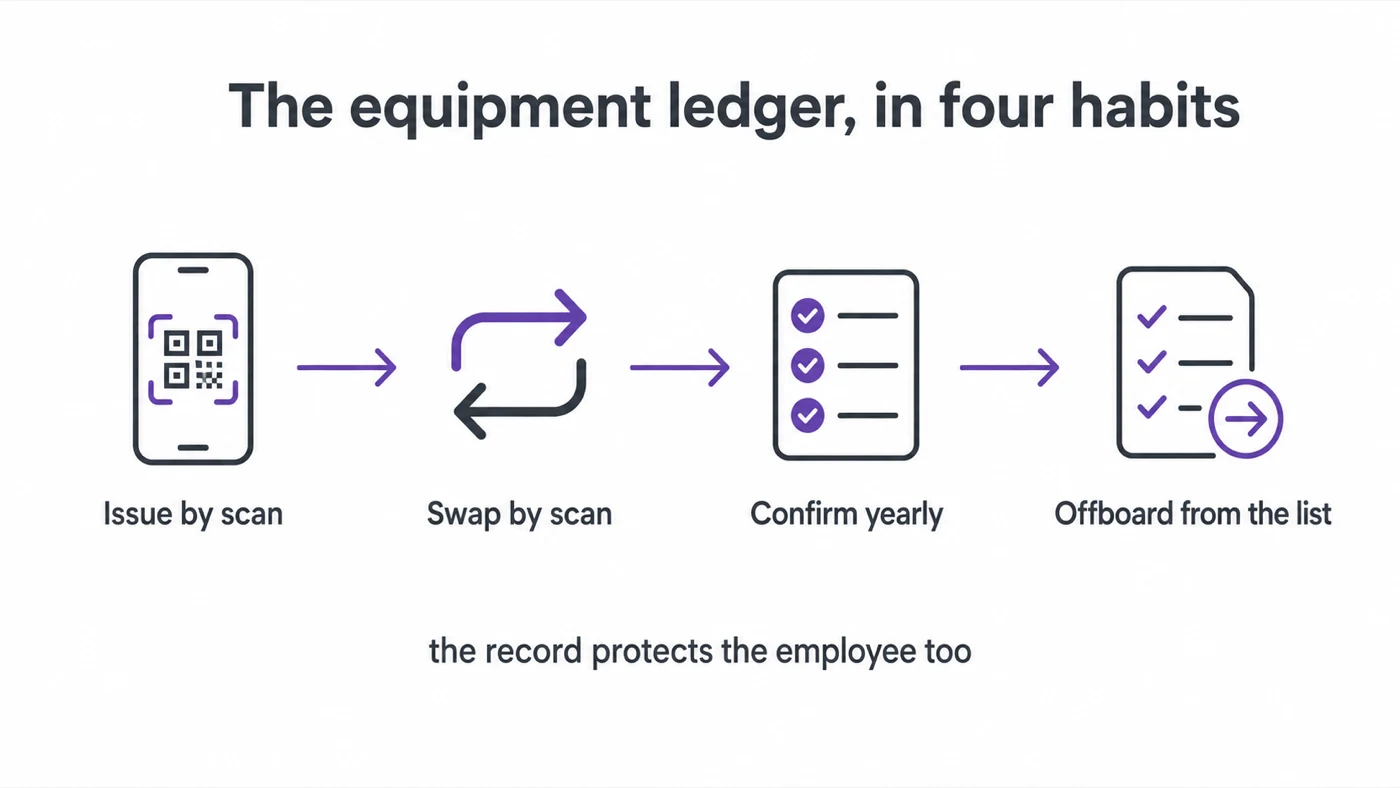
- Swaps go through the same scan. Return one, issue the other — a minute, or the ledger diverges from reality and never recovers. Making the swap easier than the hallway version is the real design goal.
- An annual confirm. Once a year, each employee gets their list and one question: still correct? Self-service reconciliation, ten minutes per person, and drift gets caught in units of one year instead of one tenure. (If the list is wrong, that's a process smell worth reading, not a person to blame.)
Offboarding: where the ledger pays for itself
Every equipment-tracking effort is ultimately judged by one scene: someone resigns, and either HR opens a complete list of what to collect — or the company discovers, three weeks after the last day, what it thinks it was owed.
With the ledger, offboarding is a checklist that generates itself: outstanding items surface the day notice is given, returns get scheduled before the exit interview, condition is recorded as things come back, and anything genuinely gone is settled while everyone is still on speaking terms. The awkward version of that conversation — the one that happens after departure, by email, with no records — is the one that actually damages relationships. The ledger isn't surveillance; it's what makes the ending amicable.
Keeping it felt-fair
Three policies that keep the system trusted: transparency (everyone can see their own list — same data, both directions), track things, not people (this is custody of objects, not location of humans; say so explicitly), and no gotchas (the annual confirm exists to fix the record, not to invoice discrepancies). Get those right and employees start using the ledger for themselves — checking what they signed for, reporting the cracked screen early because reporting is ten seconds and blame isn't the culture.
Issue by scan, swap by scan, confirm yearly, offboard from the list. Four habits, and the write-off line — and the eight-months-later camera mystery — mostly just stop happening.
Frequently Asked Questions
-
The reliable pattern is one record per item, issued to a named employee with a recorded hand-over — ideally a scan — so each person has a current equipment list. Offboarding then starts from that list instead of from memory.
-
Anything you'd want back or would have to explain to an insurer — laptops, phones, monitors, tools, test gear, vehicles, access cards and keys. The threshold isn't price; it's whether losing it quietly would matter.
-
Pull the person's outstanding-equipment list on day one of the notice period, schedule returns before the last day, and record condition as items come back. The list is the whole trick — offboarding fails when nobody knows what was issued.